A Beginner’s Guide to Fullstack Development
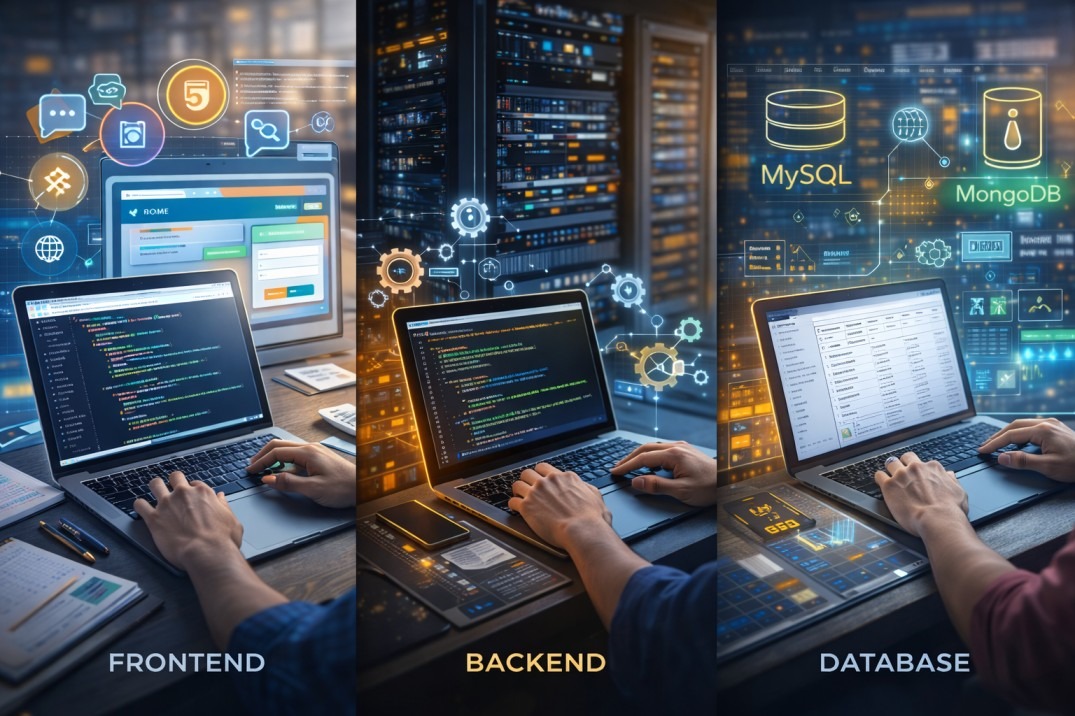
Have you ever wondered about how a website is actually working behind the screens? Every time you log into a site, scroll through a page, or submit a form, there’s a lot happening in the background. That is where web site development comes in, all the frontend tools used, the backend tools used in total becoming a “Full Stack” of tools.
Fullstack development simply means working on both sides of a website or any application, the part users see and the part that runs behind the scenes. For students who want a practical tech skill, this field is one of the most exciting places to start.
Starting a Web Development Course might be the best thing you can take to make your life easier when learning. Training platforms like Digilinkers Academy help students understand how real world websites are built while working on hands on projects.
Let’s break it down in a simple way.
What Is Fullstack Development?
Think of a website like a restaurant.
- The frontend is what customers see all the design, colors, menu, and layout.
- The backend is the kitchen where orders are processed and prepared.
A fullstack developer understands both areas and knows how they connect.
Instead of learning only design or only coding logic, fullstack developers learn how to build the entire system from start to finish.
How Fullstack Development Works (Frontend + Backend + Database)
Most modern websites work in three main layers:
Frontend (What Users See)
This includes everything you interact with:
- Buttons
- Images
- Forms
- Layout design
Frontend developers commonly work with:
- HTML
- CSS
- JavaScript
This part focuses on making websites look clean and easy to use.
Backend (How the System Works)
The backend handles the logic of the website:
- Login systems
- Data processing
- Server requests
Popular backend languages include:
- JavaScript (Node.js)
- Python
- PHP
This is where the “brain” of the website lives.
Database (Where Data Is Stored)
Every website needs to store information. That’s the job of a database.
Examples include:
- User accounts
- Product details
- Website content
Common databases include MySQL and MongoDB.
Why Students Are Choosing Fullstack Development
Fullstack development is growing fast, and students are noticing.
More job opportunities
Companies like developers who understand the full workflow.
Freelancing options
Once you know how to build complete websites, you can start small freelance projects.
Better understanding of real projects
Instead of learning pieces separately, you see how everything connects.
Startup friendly skill
Many startups prefer fullstack developers because they can handle multiple tasks.
How to Start Learning Fullstack Development
Starting can feel overwhelming, but breaking it into small steps helps a lot.
Step 1: Learn HTML, CSS, and JavaScript
These are the building blocks of the frontend.
Step 2: Learn basic backend concepts
Understand how servers work and how websites handle data.
Step 3: Learn a database
Start with simple data storage and retrieval.
Step 4: Build small projects
Projects make everything clearer. Even a simple login page teaches a lot.
A good Web Development Course usually follows this exact roadmap, so you don’t waste time jumping between random tutorials.
Common Mistakes Beginners Should Avoid
Trying to learn everything at once
Take it step by step. Fullstack development is a journey, not a race.
Watching tutorials without practicing
Coding only sticks when you actually build something.
Skipping backend learning
Many beginners focus only on design and ignore how systems work behind the scenes.
Career Opportunities After Learning Fullstack Development
Once you understand fullstack basics, several paths open up:
- Frontend Developer
- Backend Developer
- Fullstack Developer
- Freelance Web Developer
- Startup Tech Support Roles
As you gain experience, you can move into advanced frameworks and larger projects.
FAQ
1. What does fullstack development mean in simple words?
It means to work on both the frontend and the backend parts of a website or application.
2. Is fullstack development easy to learn?
If you learn step by step and practice regularly, then yes it is easy to learn.
3. In how long can I learn everything about fullstack development?
Most beginners understand the basics within 4 to 6 months with consistent practice.
4. Do I need to know anything in advance before getting a Web Development Course?
No. Many beginner courses start from scratch.
5. Is fullstack development a good career to get into?
Yes. The demand for web developers keeps growing, and fullstack skills are especially valuable. With a good Web Development Course, you can get into just much sooner that self learning.
Fullstack development might sound a lot to get into but with the right guidance and support you can learn and improve. Stay consistent, keep practicing, and focus on learning one step at a time you’ll be surprised how quickly your skills grow.